
What is embroidery digitizing, and why is there a setup fee?
Digitizing turns your logo into instructions for an embroidery machine. It is a separate preparation step from stitching the logo onto each garment.
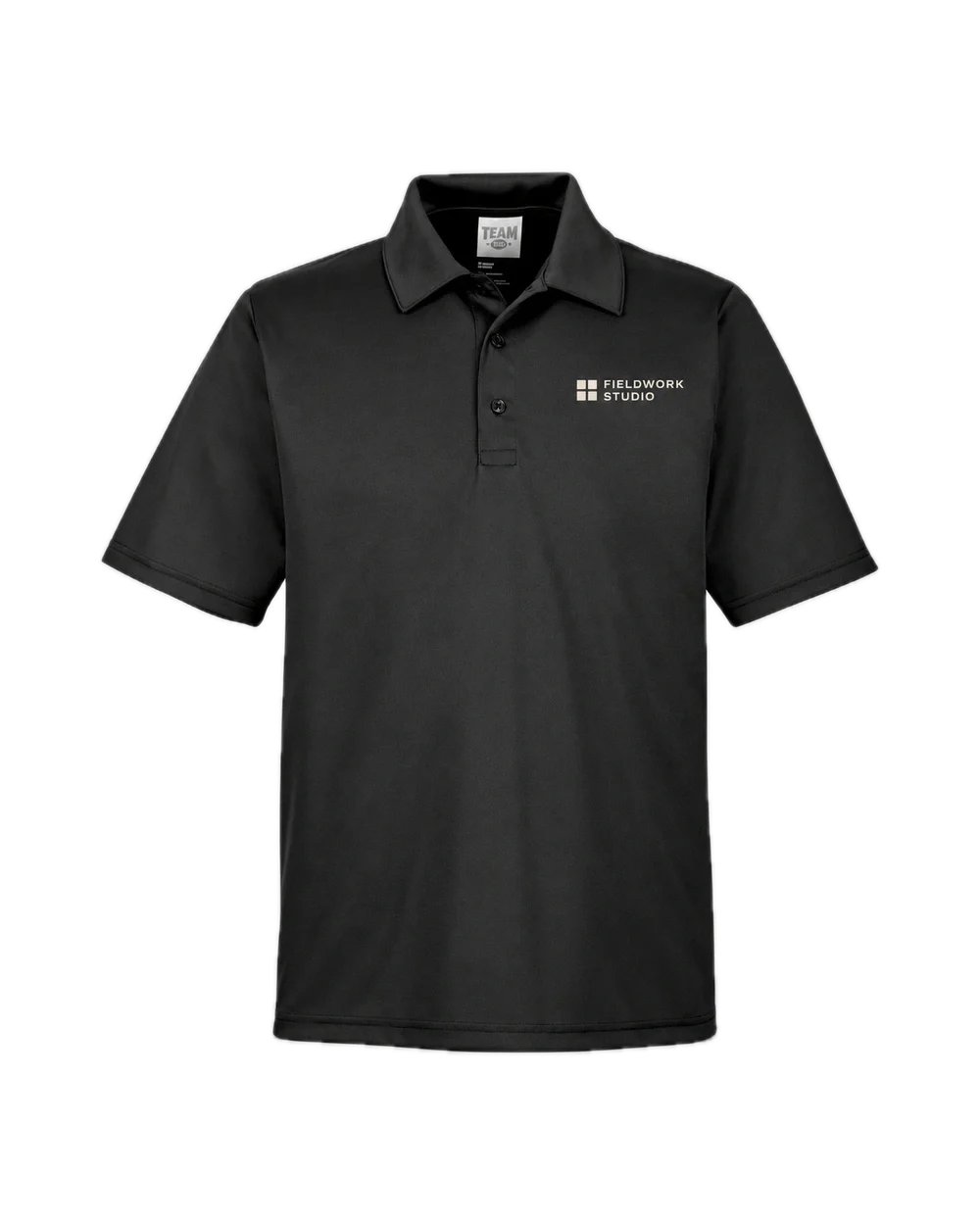
A logo file tells us what it looks like. A stitch file tells the machine how to sew it.
A JPG, PNG or vector logo contains artwork. An embroidery file contains a planned sequence of stitches. Digitizing sets stitch types, direction, spacing and sewing order, including foundation stitches that help support the visible design. Simply changing the file extension does not create those instructions.
The design also needs to account for fabric movement under thread tension. This is why a logo can look right on a screen but still need adjustment before it stitches cleanly.
The garment and finished size matter
A small chest logo, a curved cap front and a large jacket back are different jobs. Fine lettering, gradients and narrow gaps may need simplifying for thread. A cap seam, stretchy polo or lightweight tunic can change the preparation needed.
Tell us the product, placement and finished dimensions before digitizing. Enlarging or shrinking an existing stitch file is not always enough; the stitch construction may need reworking. Thread colors approximate the approved artwork, so flag any important brand-color requirement.
What our digitizing fee covers
Our standard new-logo digitizing fee is $50. It covers preparing a new standard logo for embroidery; complex artwork is scoped first. It is separate from the garment and the per-item stitching charge. Logo design or artwork cleanup is a different service and is itemized when needed.
For example, one new standard logo used in the same approved size and placement on 10 suitable polos has a $50 digitizing fee in total—not $50 for every polo. That spreads to $5 per polo for digitizing alone. Garments, embroidery, any other work, tax and delivery are additional.
What to check before production
Check spelling, staff names, thread colors, size and placement in your proof. A digital preview shows the intended design; a physical stitch-out shows how thread behaves on material. Ask what sample or stitch-out review is included for your project and whether an additional physical sample is quoted.
If tiny text needs to be removed or details simplified, we confirm the change before production. Keeping one approved version helps future orders stay consistent.
Will I pay digitizing again?
An unchanged approved embroidery file avoids repeat digitizing after review. Changing the artwork, size, garment construction or stitch requirements can require adjustment or a new setup. Moving from a polo to a cap should be reviewed before assuming the same file works.
If another decorator has already digitized your logo, tell us the file format, finished size and what it was stitched on. We review compatibility before confirming any fee. Ask about file delivery and reuse terms if you need a copy; do not assume every provider handles those terms the same way.
Your order checklist
- Send your best original logo and any existing stitch-file details.
- Specify garment, logo size, placement and team quantities.
- Approve names, thread colors and any simplified details.
- Keep the order reference for repeat-file review.
Put it into practice
Sources & further reading
- Madeira: stitch density and thread selection
- Embroidery Legacy: fabric movement and digitizing
- Mile High Custom Prints: current pricing policy
Prepared for Mile High Custom Prints customers using the references above and our ordering policies. Manufacturer guidance describes its own materials and processes. Your confirmed product specification, proof and supplied care instructions govern your order.